5-Point Breastplate vs Hunting Breastplate: Which Is Better for Jumping?

5-Point Breastplate vs Hunting Breastplate: Which Is Better for Jumping?
You've clipped your breastplate on, done up the straps, and you are fairly sure the saddle is going nowhere. But are you using the right breastplate for what you are actually doing?
For hacking and low-level jumping, almost any well-fitted breastplate will do its job. But once you are jumping regularly, competing, or riding across country, the choice between a hunting breastplate and a five-point breastplate starts to matter.
Here is a plain comparison of how they work and which one suits which situation.
The Hunting Breastplate
The hunting breastplate horse has been around for a long time for a simple reason: it works. A central chest strap, two shoulder straps connecting to the front D-rings of the saddle, and a belly loop running through the front legs to attach to the girth.
It is comfortable for the horse, relatively simple to fit, and versatile enough for most types of riding. The attachment to the front D-rings means it holds the saddle well on uphill terrain and during forward movement.
Many hunting breastplates include an attachment point for a running martingale, which makes them practical for riders who want both functions without two separate pieces of tack.
For hacking, showing, low-level jumping, and general riding where saddle slip is the primary concern, the hunting breastplate is usually the sensible choice.
The Five-Point Breastplate
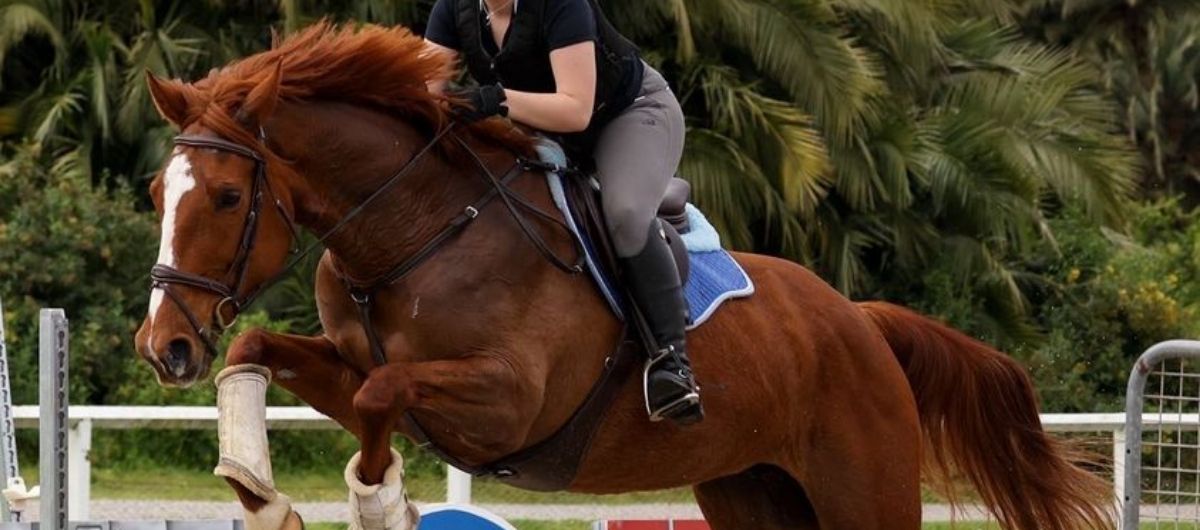
The 5 point breastplate was developed to address a specific problem: saddle stability during jumping. When a horse jumps, the force on the saddle is not just backward. It shifts sideways, twists, and surges forward on landing.
A hunting breastplate with two attachment points at the front resists backward movement well. It does less to resist lateral or rotational forces.
The 5 point breastplate adds three more attachment points: one at the breastgirth on each side of the belly, creating a symmetric framework that stabilises the saddle in multiple directions simultaneously.
The result is a saddle that stays much more reliably in place through the effort of a jump, the twist over an oxer, and the forward lurch on landing. For riders jumping at competition level or riding cross-country where the terrain adds to the forces involved, this additional stability is worth having.
Which Is Better for Jumping?
For general hacking with some small jumps, a hunting breastplate is usually sufficient.
For best breastplate for jumping, competing, or cross-country, a 5 point breastplate does a genuinely better job of keeping the saddle stable. The additional attachment points make a measurable difference to saddle security in situations where the forces on the tack are at their greatest.
That said, the 5 point breastplate is bulkier than the hunting breastplate and takes more time to fit and clean. For riders who only jump occasionally, the additional stability may not justify the additional complexity.
The honest answer is: if you jump regularly, the five-point is worth the investment. If you jump occasionally and primarily hack and school, the hunting breastplate is perfectly adequate.
Fitting Either Breastplate Correctly
The most common fitting mistake with any breastplate is fitting it too tightly.
For both types, you should be able to fit a fist between the chest strap and the horse's chest when standing. The shoulder straps should run smoothly without pulling the saddle forward or creating a visible dip in the front of the saddle.
For the five-point, the side girth straps should be snug but should not pull the girth forward out of its correct position. If the girth is migrating forward, the side straps are too short.
For more details on fitting, see our full guide on how to fit a breastplate so it does not restrict your horse.
And if saddle fit is part of the conversation, our 14-day saddle trial lets you assess a new saddle on your horse before you commit, while our fitter locator can connect you with a qualified fitter near you.
-
 September 04, 2026
Weighted stirrups: do they actually help your position?
-
 August 31, 2026
When to Replace Your Stirrup Leathers: The Warning Signs
-
 August 28, 2026
Black vs Brown Reins: Does Matching Your Bridle Actually Matter?
-
 August 24, 2026
How to Choose the Right Safety Stirrups for Jumping
-